Why Finding a Reliable Borewell Near You Has Never Been More Important
India is facing a silent water crisis. Every year, groundwater levels drop across the country. Cities like Indore, Jaipur, Hyderabad, and hundreds of smaller towns are running short of clean water. Farmers watch their crops wilt as shallow wells run dry. Families in urban apartments struggle when municipal supply fails. In this situation, a borewell is not just a convenience — it is a necessity.
Yet, finding a trustworthy borewell contractor near you remains one of the biggest challenges. Thousands of people drill borewells every year without a proper groundwater survey and end up with a dry hole, wasting lakhs of rupees. That is exactly why Bhoojal Survey exists — to help you locate underground water scientifically, drill at the right spot, and get a borewell that actually works.
This guide covers everything you need to know about borewell services in India — what a borewell is, how it works, how to conduct a proper groundwater survey, how to choose the best borewell company near you, and much more.
Quick Fact: According to CGWB (Central Ground Water Board) data, over 60% of India's irrigation and 85% of rural drinking water comes from groundwater extracted through borewells and tubewells. Finding the right drilling point is critical.
What is a Borewell?
A borewell is a narrow cylindrical hole drilled vertically into the earth to reach groundwater stored in underground aquifer zones. It is one of the most common and effective ways to access clean water in India, especially in areas where surface water sources are limited or unreliable.
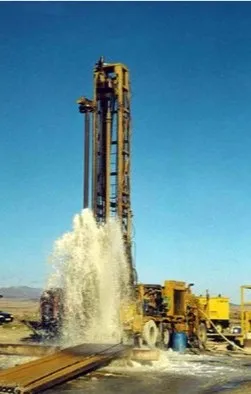
Borewells are drilled using specialized machines — rotary drilling rigs or Down-the-Hole (DTH) hammer rigs — that can penetrate through hard rock and soil to reach water-bearing formations deep underground. Once drilled, a PVC or steel casing pipe is inserted to keep the borehole stable and prevent surface contamination from entering the water.
Types of Borewells in India
Open Borewell: Larger diameter, shallow, suitable for areas with high water table. Commonly used for domestic and small farm needs.
Tube Well / Deep Borewell: Narrow diameter, deep, drilled into confined aquifer zones. Suitable for industrial, agricultural, and high-demand residential use.
DTH Borewell: Drilled using a Down-The-Hole hammer technique, effective in hard rock areas like granite and basalt formations across South and Central India.
Rotary Borewell: Uses a rotating drill bit, effective in soft to medium-hard formations. Faster drilling in alluvial plains of North India.
Regardless of the type, every borewell project should begin with a professional groundwater survey near you to identify the correct drilling point, expected depth, and likely water yield.
How Does a Borewell Work?
A borewell works by creating a direct pathway from the surface down to an underground water-bearing zone, called an aquifer. Once the borehole reaches this zone, groundwater fills the base of the well. A submersible pump is then installed inside the casing to lift the water to the surface.
The water table level — the depth at which groundwater is naturally available — varies greatly across India. In alluvial plains like Punjab and Uttar Pradesh, the water table may be just 10 to 30 meters deep. In hard rock regions like Madhya Pradesh, Rajasthan, and Deccan Plateau areas, the water table can be 60 to 200 meters deep or even more.
Step-by-Step: How a Borewell Works
A drilling rig penetrates through layers of soil, gravel, sand, and rock.
The drill reaches a fractured or porous rock formation — the aquifer — that holds groundwater.
Water from the surrounding aquifer flows into the borehole under natural pressure.
A PVC casing pipe is inserted to maintain the borehole's structure and seal it from surface contaminants.
A submersible pump is lowered into the casing and connected to an electric motor at the surface.
The pump lifts groundwater to the surface through delivery pipes for use in homes, farms, or industries.
Understanding how borewells work makes it clear why the borewell depth and drilling location matter so much. Drilling at the wrong spot means missing the aquifer entirely — resulting in a dry and expensive hole.
Need a Borewell Survey Before Drilling?
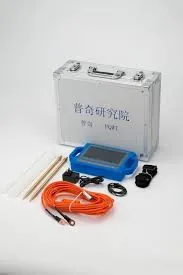
Our expert hydrogeologists use GER Detect and PQWT instruments to find the exact drilling point for your borewell — with a success rate of over 95%.
Why a Groundwater Survey is Essential Before Borewell Drilling
Most borewell failures in India happen for one simple reason — people skip the groundwater survey. Without a proper survey, even the best drilling machine cannot guarantee water. The underground geology is complex. Aquifers do not follow predictable patterns. A spot that looks promising on the surface may be completely dry below.
A professional groundwater survey near you removes the guesswork. It gives you scientific data about what is happening underground before you spend money on drilling. It identifies the exact location, depth, and likely yield of water so the drilling team knows exactly where to drill and how deep to go.
Key Benefits of a Groundwater Survey
Avoids Dry Holes: Identifies water-bearing zones before drilling, dramatically reducing the chance of a dry borewell.
Saves Money: Drilling a dry borewell can waste lakhs of rupees. A survey costs a fraction of that and pays for itself immediately.
Accurate Depth Estimate: Tells you exactly how deep to drill so you reach the aquifer without drilling unnecessarily deep.
Water Quality Assessment: A proper hydrogeological survey checks whether the groundwater is safe for drinking, farming, or industrial use.
Legal Compliance: Many states require a hydrogeological survey report from a certified expert before granting borewell drilling permission, especially in CGWA-notified areas.
Long-Term Planning: The survey report helps you understand how long the aquifer will last and whether recharge measures are needed.
Hydrogeological Survey Explained
A Hydrogeological Survey is a detailed scientific study of the groundwater system in an area. It goes beyond simply finding water — it studies the relationship between geology, soil, rainfall, and groundwater to give you a complete picture of the underground water resources.
At Bhoojal Survey, our hydrogeologists study the local rock types, soil permeability, seasonal water level fluctuations, and nearby well data to create a comprehensive report. This report is what guides the drilling team to make informed decisions about where and how deep to drill.
What a Hydrogeological Survey Includes
Lithological Analysis: Study of the rock and soil layers in the area to understand water-bearing formation types.
Water Table Mapping: Current water table levels measured from nearby wells and borewells to estimate depth.
Aquifer Identification: Locating confined and unconfined aquifer zones using geophysical instruments.
Water Quality Testing: On-site and laboratory analysis of groundwater for TDS, pH, fluoride, nitrates, and other key parameters.
Recharge Zone Assessment: Identifying areas where rainwater recharges the aquifer to plan sustainable extraction.
Drilling Recommendation Report: A written report with GPS-marked drilling points, recommended depth, expected yield, and casing specifications.
This level of detail is what separates a professional borewell services provider from an ordinary drilling contractor. Always insist on a full hydrogeological survey report before any drilling begins.
Underground Water Detection Methods Used by Experts
Modern Underground water detection relies on geophysical science rather than traditional guesswork. Expert teams use a combination of instruments and field techniques to map the subsurface and identify water-bearing zones with high accuracy.
At Bhoojal Survey, we use three proven technologies for water detection services:
1. GER Detect — Electrical Resistivity Survey
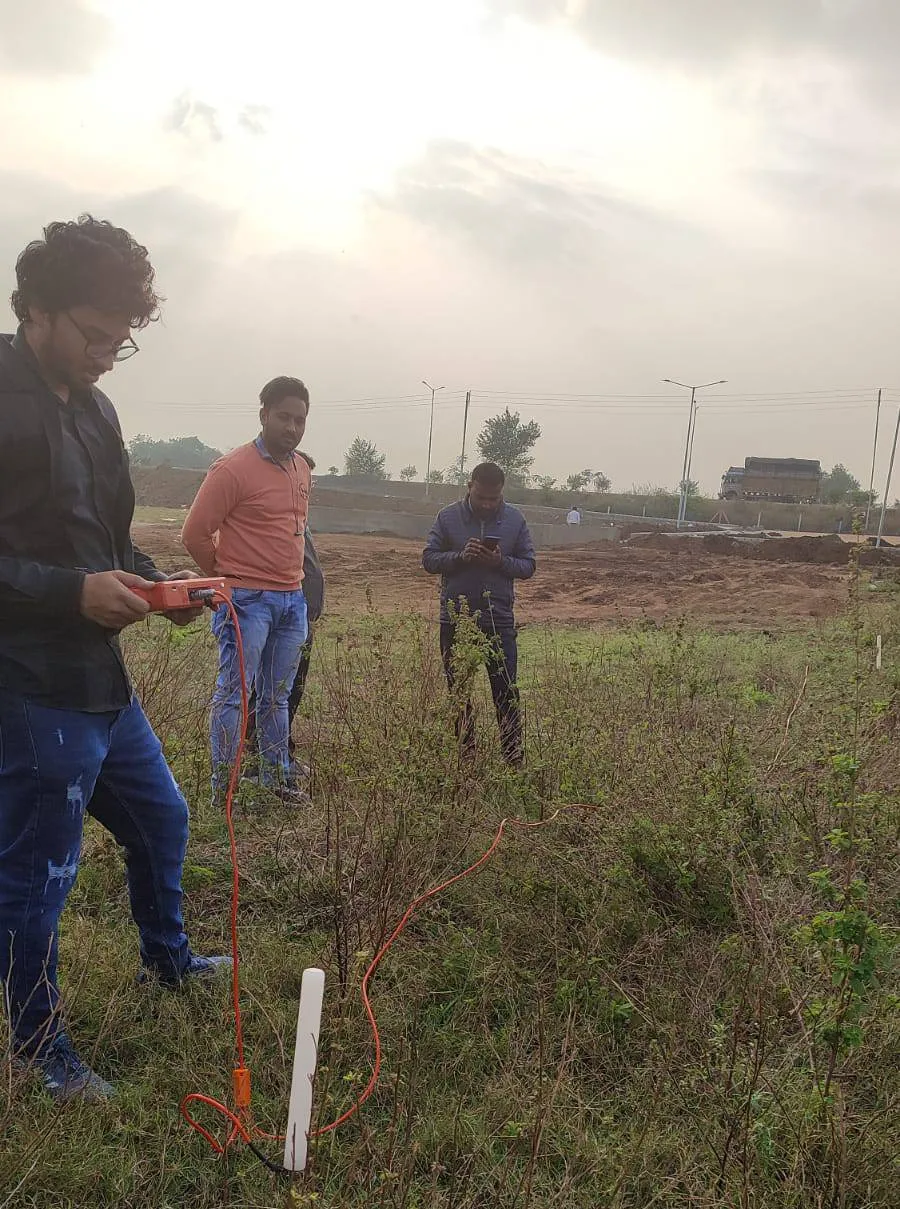
The GER Detect instrument works on the principle of electrical resistivity. Electrodes are placed in the ground and a controlled electrical current is passed between them. Since water conducts electricity better than dry rock, zones with groundwater show lower resistivity values. The data is processed to create 2D and 3D underground maps showing the exact location and depth of water-bearing layers.
2. PQWT — Nuclear Magnetic Resonance (NMR) Survey
The PQWT instrument uses the same technology as medical MRI scans. It sends electromagnetic pulses into the ground and measures the response from hydrogen nuclei in water molecules. This directly detects water — not just rock properties — making it one of the most accurate water detection services available. The PQWT also estimates the quantity of water, helping predict the borewell yield.
3. Schlumberger Resistivity Method
This is a field-proven geophysical technique where electrode spacing is systematically increased to probe progressively deeper underground layers. The Schlumberger method creates a detailed vertical profile of the subsurface, making it ideal for identifying deep confined aquifers in hard rock terrain across India.
Other Supporting Methods
Remote Sensing and GIS: Satellite imagery analysis to identify geological lineaments and surface features linked to underground water presence.
Seismic Refraction: Sound wave analysis to map rock layer boundaries and fracture zones that often hold groundwater.
Hydrogeological Mapping: Study of existing well data, rainfall records, and soil maps to understand regional groundwater patterns.
Borewell Drilling Process: From Survey to Water Flow
Once the groundwater survey is complete and a drilling point is identified, the actual borewell drilling process begins. Understanding each step helps you monitor the work and ensures you get the best result from your investment.
The Complete Borewell Drilling Process
Site Survey and Mark-Out: The hydrogeologist marks the exact drilling point on the ground based on survey data. GPS coordinates are recorded.
Drilling Machine Setup: A rotary rig or DTH hammer drilling machine is positioned at the marked spot. The drill bit size is chosen based on the borewell design.
Drilling Through Layers: The machine drills through soil, gravel, weathered rock, and hard rock until it reaches the aquifer zone.
Water Strike and Yield Testing: When the drill reaches the water-bearing zone, water flows into the borehole. The driller tests the yield — how many litres per hour the aquifer can provide.
Casing Installation: PVC or steel casing pipes are inserted from the top to the required depth to stabilize the borehole and prevent contamination.
Well Development: The borewell is flushed with water to clear drilling debris and improve water flow from the aquifer.
Pump Installation: A submersible pump of the right capacity is installed at the appropriate depth based on the water table level and required yield.
Water Quality Test: A water sample is collected and sent to a laboratory to confirm the water is safe for its intended use.
Each of these steps requires skill and experience. This is why choosing the right borewell contractor near you matters as much as choosing the right drilling point.
How to Choose the Best Borewell Contractor Near You
There are hundreds of borewell contractors operating across India. Not all of them are equally skilled or honest. Choosing the wrong contractor can cost you money, time, and still leave you without water. Here is what to look for when searching for the best borewell company near you.
Key Factors to Check Before Hiring a Borewell Contractor
Licensed and Certified: Always check if the contractor holds a valid drilling license issued by the state Water Resources Department. This is a legal requirement in most states.
Uses Scientific Survey Methods: A professional borewell contractor will always insist on a proper groundwater survey before drilling — not just rely on guesswork or divining rods.
Modern Drilling Equipment: Check if the contractor uses modern DTH rigs or rotary rigs suitable for your local geology. Outdated machines are slower and less effective.
Proven Track Record: Ask for references from past clients in your area. A reliable contractor will have many satisfied customers willing to share their experience.
Transparent Pricing: A good contractor provides a clear written estimate covering drilling depth charges, casing pipes, pump installation, and any additional work. Avoid contractors who give only verbal estimates.
Post-Drilling Support: The contractor should assist with pump selection, installation supervision, and initial water quality testing after the borewell is complete.
CGWA Compliance Knowledge: The contractor must be aware of the Central Ground Water Authority (CGWA) regulations in your area and ensure drilling is done legally.
Expert Tip: Before hiring any borewell contractor near you, always separate the groundwater survey from the drilling work. Book your survey with a certified hydrogeologist first, get the written report, and then hire a drilling contractor to drill at the recommended spot. This two-step approach protects your investment.
Borewell Maintenance and Safety
Drilling a borewell is only the beginning. Proper maintenance keeps your borewell productive and the water safe for years. A neglected borewell can suffer from reduced yield, pump failure, casing damage, and water quality deterioration.
Borewell Maintenance Checklist
Regular Water Quality Testing: Test borewell water at least once a year for TDS, pH, bacterial content, fluoride, and nitrate levels.
Pump Servicing: Service the submersible pump every 12 to 18 months to prevent motor burn-out and maintain water flow efficiency.
Casing Inspection: Inspect the borewell casing periodically for cracks or signs of surface contamination entry. A damaged casing can allow sewage or agricultural chemicals to enter the water.
Keep Borewell Top Sealed: Always keep the borewell head properly sealed with a concrete platform and a locked cap to prevent insects, debris, and surface water from falling in.
Monitor Water Level: Track the water table level seasonally. A declining water level may indicate aquifer depletion and may require recharge measures.
Groundwater Recharge Measures: In areas with declining water tables, consider rainwater harvesting and recharge pit construction to replenish the aquifer.
Borewell Safety Guidelines
Always cover unused or abandoned borewells with a welded steel cap or concrete to prevent children, animals, or objects from falling in.
Never allow children to play near open borewells or borewell covers.
Maintain a distance of at least 15 meters between a borewell and any septic tank or open drain.
Install a proper electrical earthing for the submersible pump motor to prevent electric shock hazards.
Report any sudden drop in borewell yield to a qualified hydrogeologist for investigation before the problem worsens.
Bhoojal Survey: Expert Borewell and Groundwater Survey Services Across India
Bhoojal Survey is one of India's most trusted names in groundwater survey and borewell services. Based in Indore, Madhya Pradesh, our team of certified hydrogeologists and geophysicists has completed thousands of successful surveys across India — from the alluvial plains of Uttar Pradesh to the hard rock terrains of Madhya Pradesh, Rajasthan, and Maharashtra.
We do not simply point to a spot on the ground and say "drill here." We conduct a detailed geophysical survey using GER Detect and PQWT instruments, prepare a comprehensive hydrogeological survey report, and give you written, data-backed drilling recommendations. Our success rate of over 95% is the result of combining scientific tools with years of field experience across diverse geological formations in India.
What Makes Bhoojal Survey Different
Advanced Instruments: We use GER Detect for electrical resistivity surveys and PQWT for NMR-based direct water detection — two of the most accurate underground water detection tools available.
Certified Hydrogeologists: Our team includes qualified geologists and hydrogeologists with deep expertise in Indian groundwater conditions.
Detailed Written Reports: Every survey results in a clear, GPS-mapped report with drilling recommendations, expected depth, yield estimates, and water quality notes.
Pan-India Reach: We have served clients across 18+ cities and regions in India, including Indore, Bhopal, Jaipur, Ahmedabad, Bangalore, Jabalpur, and more.
Trusted by Industry Leaders: Our clients include IOCL, HPCL, NTPC, Infosys, John Deere, Adani Ports, Cipla, and Lupin — organizations that demand the highest accuracy and reliability.
Free Initial Consultation: We offer a free consultation to understand your water requirement before recommending the right survey approach for your site.
Ready to Find Water on Your Property?
Book a professional groundwater survey with Bhoojal Survey today. Our experts will visit your site, conduct a scientific survey, and give you a clear drilling recommendation — before you spend a rupee on drilling.
Many borewell projects fail not because of bad luck, but because of avoidable mistakes. Here are the most common errors people make — and how to avoid them.
Skipping the Groundwater Survey: This is the most expensive mistake. Without a geophysical survey, you are essentially gambling with lakhs of rupees. Always survey first, drill second.
Trusting Divining Rods or Local Folklore: Traditional water-finding methods have no scientific basis. They cannot detect aquifer depth, yield, or water quality. Always rely on scientific instruments.
Choosing the Cheapest Driller Without Verification: The lowest quote often means cutting corners on equipment, casing quality, or compliance. Compare quality and track record, not just price.
Ignoring Water Quality: A borewell can give good water in quantity but poor quality — high fluoride, arsenic, iron, or salinity — which can cause serious health problems. Always test water quality after drilling.
Drilling in a Legally Restricted Zone: In many over-exploited groundwater zones notified by CGWA, new drilling without permission is illegal. Check legal requirements before starting any borewell project.
Not Getting the Report in Writing: Verbal recommendations have no accountability. Always insist on a written survey report with data, maps, and signed recommendations from the hydrogeologist.
Neglecting Post-Drilling Maintenance: A new borewell that is not properly maintained will lose yield and water quality within a few years. Set up a regular maintenance schedule from day one.
The Future of Groundwater in India
India's groundwater future depends on two things: smarter extraction and active recharge. The country is one of the largest users of groundwater in the world. In many states, extraction already exceeds natural recharge rates, causing water tables to decline year after year. Without action, millions of borewells will go dry within the next decade.
The solution is not to stop using borewells. It is to use them more scientifically. That means conducting proper groundwater surveys before drilling, drilling only at productive aquifer zones, avoiding over-extraction, and investing in rainwater harvesting and groundwater recharge infrastructure.
Key Trends Shaping the Future of Borewell Services in India
AI and Remote Sensing: Satellite-based geological mapping and AI-powered data analysis are making groundwater surveys faster and more accurate than ever before.
Real-Time Water Level Monitoring: IoT-enabled water level sensors are being installed in borewells to track extraction rates and water table changes in real time.
Mandatory Survey Regulations: More state governments are making hydrogeological surveys mandatory before granting borewell drilling permits — a positive step toward sustainable groundwater management.
Aquifer Recharge Programs: Government and private sector programs to recharge depleted aquifers through check dams, percolation pits, and rooftop rainwater harvesting are gaining momentum.
Community Groundwater Management: Villages and urban communities are coming together to manage shared aquifers responsibly, balancing extraction with recharge.
At Bhoojal Survey, we are committed to being part of this sustainable future. Every survey we conduct, every dry hole we help a client avoid, and every recharge recommendation we make contributes to protecting India's groundwater for future generations.
Frequently Asked Questions: Borewell Services in India
What is borewell?
A borewell is a narrow, deep cylindrical hole drilled vertically into the ground to reach underground water stored in aquifer zones. It is the most reliable source of clean water for drinking, irrigation, and industrial use in India. Borewells are drilled using rotary or DTH drilling machines and cased with PVC or steel pipes to prevent collapse and contamination from surface sources.
How does borewell work?
A borewell works by penetrating through layers of soil and rock until it reaches a water-bearing aquifer. A submersible pump installed inside the casing lifts groundwater to the surface. The casing prevents the borehole from collapsing and stops surface contaminants from reaching the groundwater. Water is delivered through pipes to tanks or distribution points for use.
When to stop borewell drilling?
Drilling should stop once a productive aquifer zone with sufficient water yield is reached. The driller monitors water inflow and tests yield before stopping. If no water is found at the recommended depth, the survey data should be reassessed before drilling deeper. Drilling beyond the designed depth without water indication wastes money and can destabilize the borehole structure.
How to detect underground water for borewell?
Underground water is detected through scientific geophysical methods. The most reliable techniques include electrical resistivity surveys using GER Detect instruments, Nuclear Magnetic Resonance (NMR) surveys using the PQWT instrument, and hydrogeological mapping. These surface-based methods identify the exact depth and location of water-bearing zones without any drilling.
How to find water underground for borewell?
To find water underground for a borewell, always conduct a professional groundwater survey before drilling. A qualified hydrogeologist will visit the site, use geophysical instruments such as GER Detect or PQWT, analyze local geology, and prepare a survey report showing the best drilling point, expected depth, and estimated water yield. This scientific approach avoids dry holes and protects your investment.
What is borewell water?
Borewell water is groundwater extracted from underground aquifers through a drilled borehole. It is generally clean and free from surface contamination but may contain dissolved minerals like fluoride, calcium, iron, or magnesium depending on local geology. In some regions, borewell water may need treatment before it is safe for drinking. A laboratory water quality test is recommended after every new borewell is completed.
How to purify borewell water at home naturally?
Allow water to settle in a clean tank so suspended particles sink, then pass it through a multi-stage filtration system with a sediment filter, activated carbon filter, and a reverse osmosis (RO) unit to remove dissolved minerals. For biological purification, UV treatment is effective. Always get the water tested in a lab first to identify exactly which contaminants are present, then choose the right treatment method.
Which motor is best for borewell?
A submersible pump motor is the best choice for borewell water extraction. It is installed inside the borewell casing, submerged in water, and efficiently lifts water from deep depths. Reputable brands include Grundfos, Kirloskar, CRI, and Shakti. The correct motor size depends on borewell depth and required yield. Always consult your drilling contractor or hydrogeologist for the right selection for your specific borewell conditions.
Which water purifier is best for borewell water?
An RO (Reverse Osmosis) purifier combined with a UV stage is the most effective choice for borewell water in India, as it removes both dissolved minerals and bacteria. Leading brands like Kent, Aquaguard, Livpure, and HUL Pureit offer reliable RO+UV systems suitable for high-TDS borewell water. Before purchasing, get your borewell water tested so you select the right purifier for your specific water quality.
Bhoojal Survey & Recharging
Address: Plot EE 347 , Scheme No 94 , Bengali Square , Indore MP 452016
Phone: +91-9691858058
Email: [email protected]
Website: www.bhoojalsurvey.in
Hours: Monday – Saturday, 9:00 AM to 6:00 PM
Stop Guessing. Start Drilling at the Right Spot.
Contact Bhoojal Survey today for a professional groundwater survey, borewell consultation, or underground water detection service anywhere in India.