
Operating an industrial unit, infrastructure project, or mining facility in India requires strict adherence to environmental laws. Among these regulations, securing legal access to water is paramount. If your operations rely on subsurface water extraction, understanding the role of the central regulatory framework is absolutely critical.
The CGWA (Central Ground Water Authority) is the apex regulatory body in India tasked with governing, regulating, and monitoring groundwater extraction to ensure environmental sustainability. Established under the Environment (Protection) Act of 1986, the authority mandates that commercial, industrial, and infrastructure developers secure a formal CGWA NOC (No Objection Certificate) before constructing any groundwater abstraction structures or drawing subsurface water.
For project developers across the nation, maintaining total CGWA compliance is legally mandatory to avoid severe financial penalties, litigation, or sudden operational closure.
What is CGWA?
The Central Ground Water Authority (CGWA) serves as the principal statutory body for groundwater governance in India. Its primary purpose of establishment was to address the rapid depletion of underground aquifers caused by unregulated extraction and accelerating climate pressures.
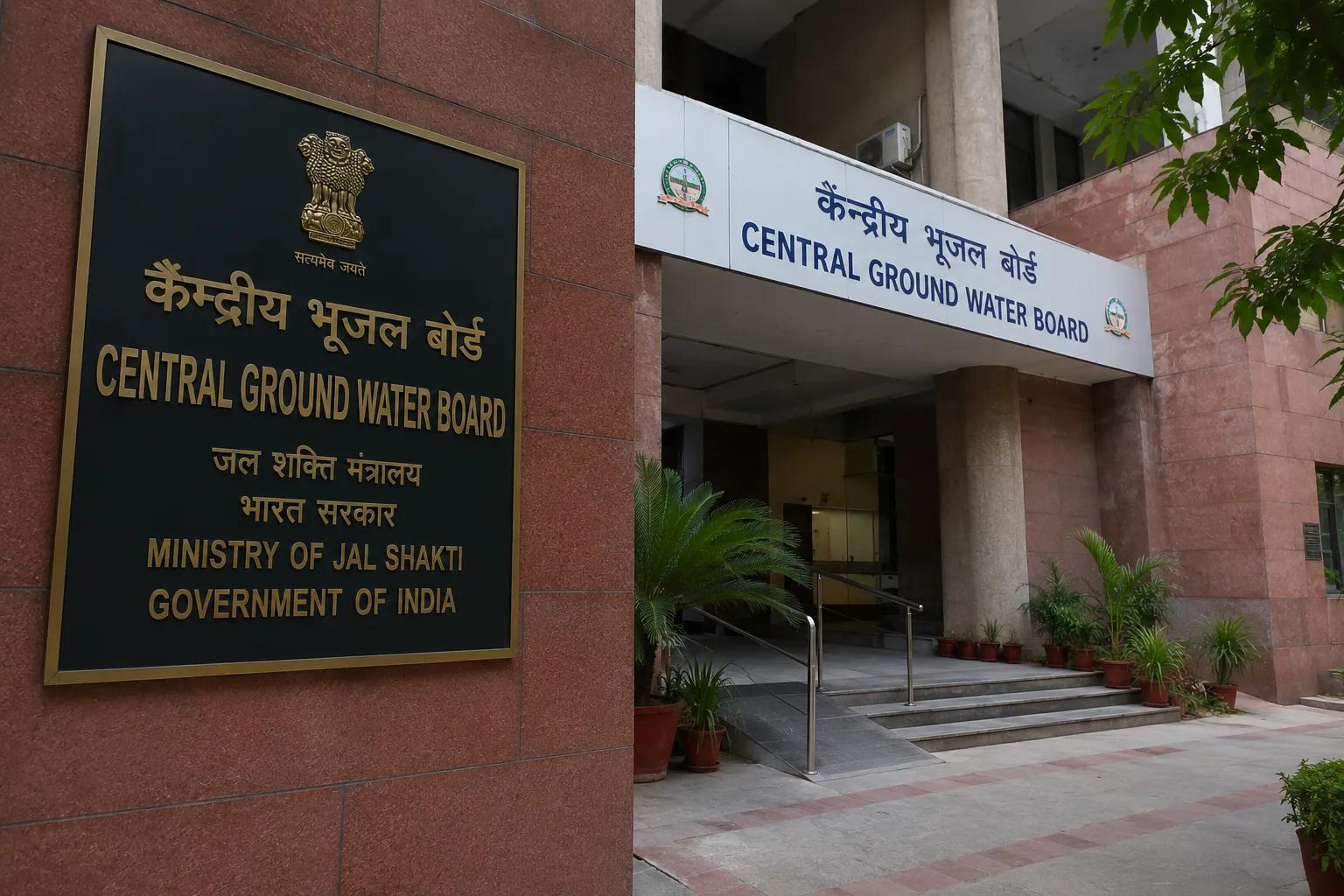
Operating under the Ministry of Jal Shakti, its regulatory responsibilities encompass assessing regional water tables, categorizing areas based on extraction severity (such as safe, semi-critical, critical, and over-exploited blocks), and enforcing uniform groundwater regulations India-wide. By controlling how much water commercial entities draw, the authority plays an indispensable role in maintaining ecological balance and protecting national water security.
Functions and Responsibilities of CGWA
To manage India's vulnerable subsurface reserves, the authority executes several core functions:
- Groundwater Extraction Regulation: Enforcing strict volumetric caps on daily and annual abstraction limits for industrial units.
- Issuing NOCs: Evaluating technical applications to grant legal groundwater extraction permission.
- Conservation Initiatives: Mandating dual systems like artificial rainwater harvesting and recycling structures for all bulk water consumers.
- Compliance Monitoring: Conducting unexpected site audits to verify piezometer readings and water-flow meter data.
The CGWA Approval Process for Groundwater Extraction
Securing a groundwater NOC approval requires navigating a highly technical, multi-stage administrative framework:
[Water Requirement Assessment] ──► [Hydrogeological Investigation] │ ▼ [NOC Issuance & Monitoring] ◄── [Technical Board Review]
- Groundwater Requirement Assessment: Calculate exact daily raw water demands based on industrial manufacturing processes or project occupancy.
- Hydrogeological Investigation: Conduct a field-level evaluation of local soil types, aquifer depths, and regional recharge dynamics.
- Documentation Preparation: Draft comprehensive scientific water impact reports, drainage plan maps, and harvesting layouts.
- Online Application Submission: Upload complete technical data files directly to the centralized web portal.
- Technical Evaluation: Undergo multi-tier review by government scientists to verify regional environmental safety before final approval.
Comprehensive site evaluations require highly specialized field tools. Bhoojal Survey delivers advanced groundwater and geophysical survey solutions, conducting hydrogeological survey using SSRMPATS Instrument, GER DETECT, and PQWT at site for open well / borewell location. This rigorous approach yields the precise data required for scientific groundwater investigation and analysis reports.
Tangible Benefits of CGWA Compliance
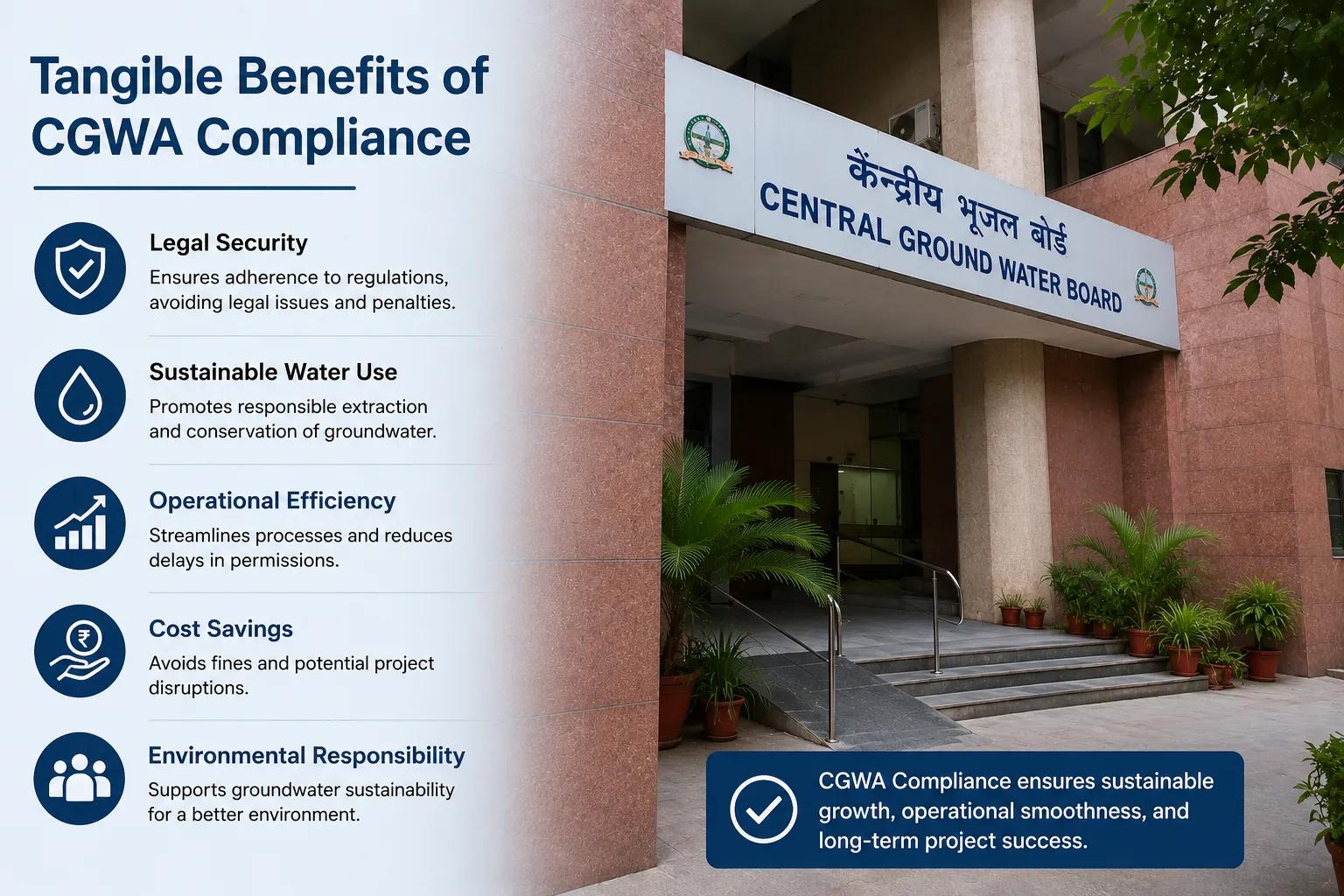
Maintaining perfect alignment with national groundwater guidelines offers major operational and strategic advantages for corporate developers:
- Legal Security: Eliminates the risk of sudden environmental litigation, heavy green fines, or forced sealing of functional borewells.
- Enhanced Corporate Reputations: Demonstrates strong Environmental, Social, and Governance (ESG) metrics to international investors and financial institutions.
- Operational Continuity: Secures uninterrupted, legally protected access to water resources during seasonal shortages.
- Faster Project Approvals: Accelerates downstream building permissions and state-level pollution control board clearances.
Why Choose Bhoojal Survey?
Bhoojal Survey is a premier groundwater regulatory consultancy, providing end-to-end CGWA NOC approval services designed to simplify your compliance pipeline.
- Veteran Legal & Technical Experts: Our senior hydrogeologists specialize in complex industrial groundwater approval workflows.
- Advanced Field Diagnostics: We perform precision data gathering using top-tier geophysical instrumentation portfolios.
- Flawless Documentation Support: We handle everything from initial impact reporting to complex technical portal submissions.
- Pan-India Scope: We provide localized groundwater permission consultancy in India across all industrial estates and geographic zones.
Conclusion
Securing timely CGWA approvals is fundamental to running a legal, sustainable, and climate-resilient enterprise in India. By anchoring your project planning in verifiable field data and professional regulatory mapping, you protect both your commercial investments and India’s delicate water ecosystems.
Don't let regulatory delays hold back your project timeline. Contact Bhoojal Survey today for premier CGWA consultancy services and automated water management guidance.
Frequently Asked Questions
1. What is the full form of CGWA?
The full form of CGWA is the Central Ground Water Authority, operating under the Ministry of Jal Shakti, Government of India.
2. Who exactly needs to apply for a CGWA NOC?
All new or expanding industrial units, infrastructure projects (like residential townships or commercial malls), and mining companies extracting groundwater must secure approval.
3. Is the CGWA permission mandatory across all states in India?
Yes. It is legally mandatory under central environmental guidelines, though certain states manage approvals through their own independent State Ground Water Authorities.
4. What happens if an industry extracts groundwater without a valid NOC?
Violators face severe environmental compensation penalties, immediate sealing of illegal borewells, and potential cancellation of factory operating licenses.
5. How long is a granted groundwater extraction license valid?
Validity terms typically range from 2 to 5 years depending on your specific area categorization (Safe vs. Critical), after which a renewal application must be submitted.