

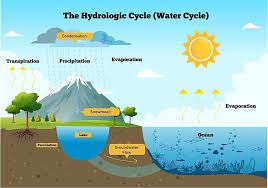
Hydrological Cycle
Water is the foundation of all life on Earth. But have you ever wondered how water keeps moving across the planet — from oceans to clouds to rivers and back into the ground? This continuous journey of water is what scientists call the hydrological cycle. Understanding what we mean by the hydrological cycle is essential for environmental scientists, water resource planners, civil engineers, and anyone working in groundwater investigation or watershed management.
At Bhoojal Survey, we work closely with this science every day — conducting hydrological investigations, groundwater surveys, and watershed analyses across India to help communities and industries manage water responsibly.
What Do You Mean by Hydrological Cycle?
The hydrological cycle, also known as the water cycle, is the continuous natural process by which water circulates between the Earth's surface, atmosphere, and underground aquifers. It involves movement through evaporation, condensation, precipitation, infiltration, and runoff — forming a closed-loop system that sustains freshwater availability globally.
In simple terms, when you ask what do you mean by hydrological cycle, the answer is: it is the scientific process describing how water moves through the environment, maintaining hydrological balance and supporting ecosystems, agriculture, and human water supply.
This cycle has no beginning or end — it is a perpetual system driven by solar energy and gravity, forming the backbone of all hydrology and water resource management studies.
Stages of the Hydrological Cycle
The hydrological cycle operates through several interconnected stages:
- Evaporation – Solar heat converts surface water from oceans, rivers, and lakes into water vapour, driving the entire hydrological system.
- Transpiration – Plants release moisture into the atmosphere, contributing significantly to ecosystem water circulation.
- Condensation – Water vapour cools at higher altitudes, forming clouds and preparing for precipitation.
- Precipitation – Water falls back to Earth as rain, snow, or hail, initiating the rainfall and runoff process.
- Infiltration – A portion of rainwater seeps into the soil, beginning the groundwater recharge process and replenishing aquifers.
- Surface Runoff – Excess water flows across land into rivers, lakes, and streams, shaping watershed hydrology.
- Groundwater Recharge – Deep infiltration feeds underground aquifers, sustaining long-term groundwater circulation and availability.
Each stage is critical to maintaining the hydrological balance that supports both natural environments and human water demands.
Importance of the Hydrological Cycle
Understanding the hydrological cycle process is not just academic — it has direct real-world implications:
- Groundwater Recharge in India – The cycle sustains aquifer recharge, which is critical in water-scarce regions across Rajasthan, Maharashtra, Gujarat, and Madhya Pradesh.
- Agricultural Water Management – Farmers depend on predictable precipitation and soil moisture patterns linked directly to the water cycle.
- River and Lake Sustainability – Surface water systems remain functional only through consistent rainfall and runoff processes.
- Flood and Drought Regulation – A disrupted hydrological cycle directly contributes to extreme flood and drought events.
- Environmental Ecosystem Support – Wetlands, forests, and biodiversity depend on stable groundwater and surface water interaction.
At Bhoojal Survey, our field teams apply this understanding while conducting hydrogeological surveys using SSRMPATS Instrument, GER DETECT, and PQWT at site for open well and borewell location — delivering advanced hydrological and groundwater survey solutions backed by scientific environmental investigation and analysis.
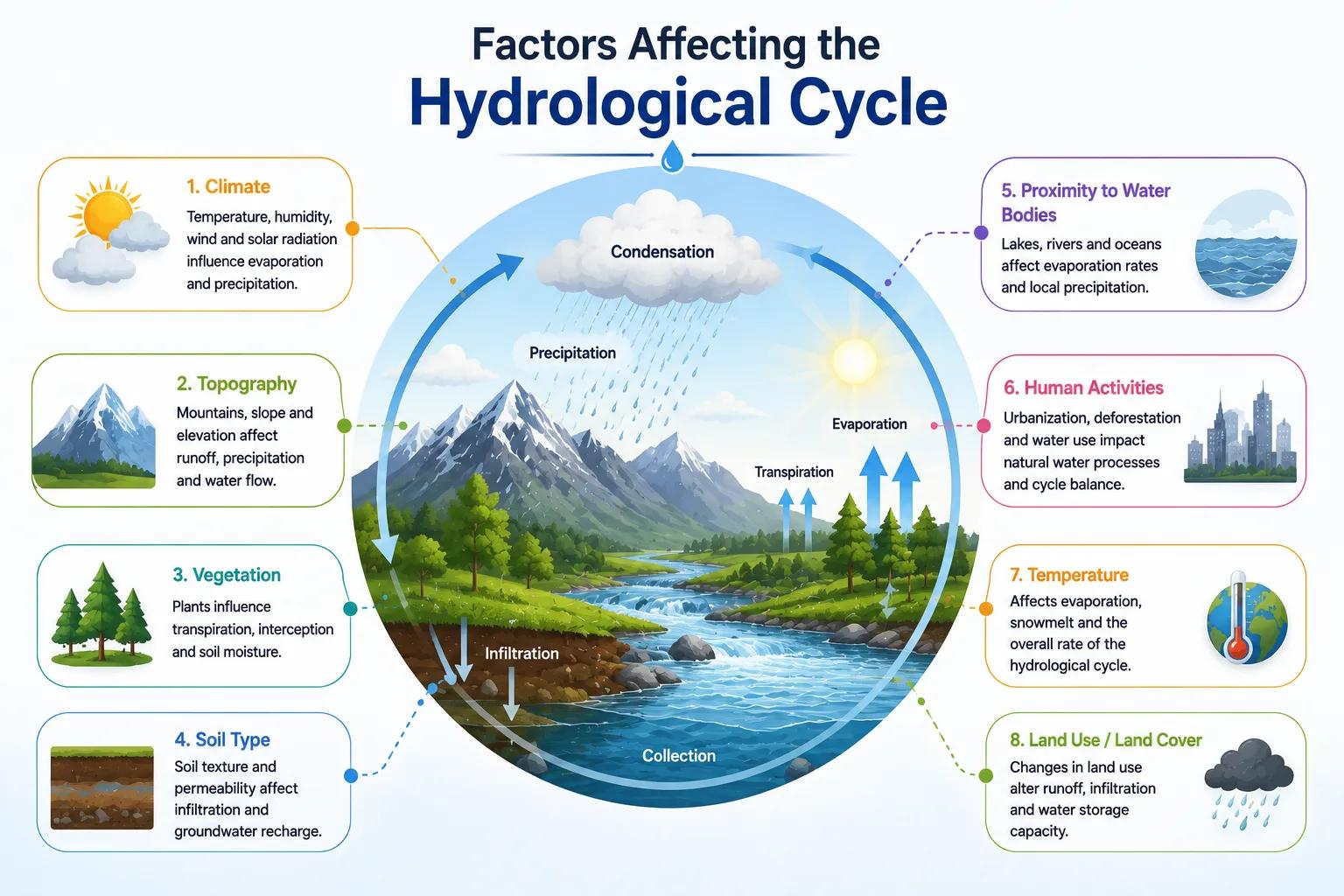
Factors Affecting the Hydrological Cycle
Several human and natural factors are disrupting the natural hydrological cycle today:
- Climate Change – Alters precipitation patterns, accelerates evaporation, and intensifies droughts and floods.
- Deforestation – Reduces transpiration and increases surface runoff, weakening groundwater recharge.
- Urbanization – Impermeable surfaces prevent infiltration, reducing the aquifer recharge process.
- Pollution – Contaminates groundwater and surface water, degrading hydrological system quality.
- Excessive Groundwater Extraction – Disrupts natural groundwater circulation and depletes aquifer levels.
- Irregular Rainfall Patterns – Directly impacts the scientific water cycle, affecting agriculture and water supply security.
Addressing these factors requires expert hydrological investigation and careful water resource management — areas where Bhoojal Survey provides comprehensive consultancy support.
Why Choose Bhoojal Survey for Hydrological Investigation?
Bhoojal Survey is a trusted name in professional hydrology consultancy in India, offering:
- Experienced Hydrology Experts with deep domain knowledge in environmental water cycle analysis
- Advanced Groundwater Investigation Technologies including SSRMPATS, GER DETECT, and PQWT instruments
- Scientific Hydrological Analysis with accurate field data and professional interpretation
- Pan-India Survey Services covering watershed management, flood modelling, and groundwater resource surveys
- Customized Environmental Solutions aligned with CGWB guidelines and Ministry of Jal Shakti standards
- Professional Reporting and Consultancy trusted by government agencies, infrastructure developers, and agricultural planners
When accuracy matters in scientific groundwater investigation services, Bhoojal Survey delivers results you can rely on.
Conclusion
The hydrological cycle is one of nature's most vital systems — sustaining groundwater, agriculture, ecosystems, and climate balance. When you understand what we mean by the hydrological cycle, you better appreciate why precise hydrological investigation and water resource assessment are so important, especially in a diverse country like India.
Whether you need a groundwater analysis consultancy, watershed management support, or a complete water resource assessment service, Bhoojal Survey is here to help.
📞 Contact Bhoojal Survey today for expert hydrological investigation, scientific groundwater surveys, and environmental water management solutions across India.
Frequently Asked Questions (FAQs)
Q1. What do you mean by hydrological cycle? The hydrological cycle is the continuous natural process by which water circulates between the Earth's surface, atmosphere, and underground systems through evaporation, condensation, precipitation, infiltration, and runoff.
Q2. What are the main stages of the water cycle? The main stages are evaporation, transpiration, condensation, precipitation, surface runoff, infiltration, and groundwater recharge — all working together to maintain the earth's hydrological balance.
Q3. Why is groundwater recharge important in India? Groundwater recharge replenishes underground aquifers that millions of Indians depend on for drinking water, irrigation, and industrial use — making it a critical concern in water management across India.
Q4. How does climate change affect the hydrological cycle? Climate change disrupts rainfall patterns, accelerates evaporation, reduces groundwater recharge, and increases the frequency of floods and droughts — severely impacting water resource availability across India.
Q5. What is the importance of hydrology in water resource management? Hydrology helps professionals understand how water moves through the environment, enabling better planning for irrigation, flood control, groundwater conservation, and sustainable water supply — especially critical for India's growing water demands.