

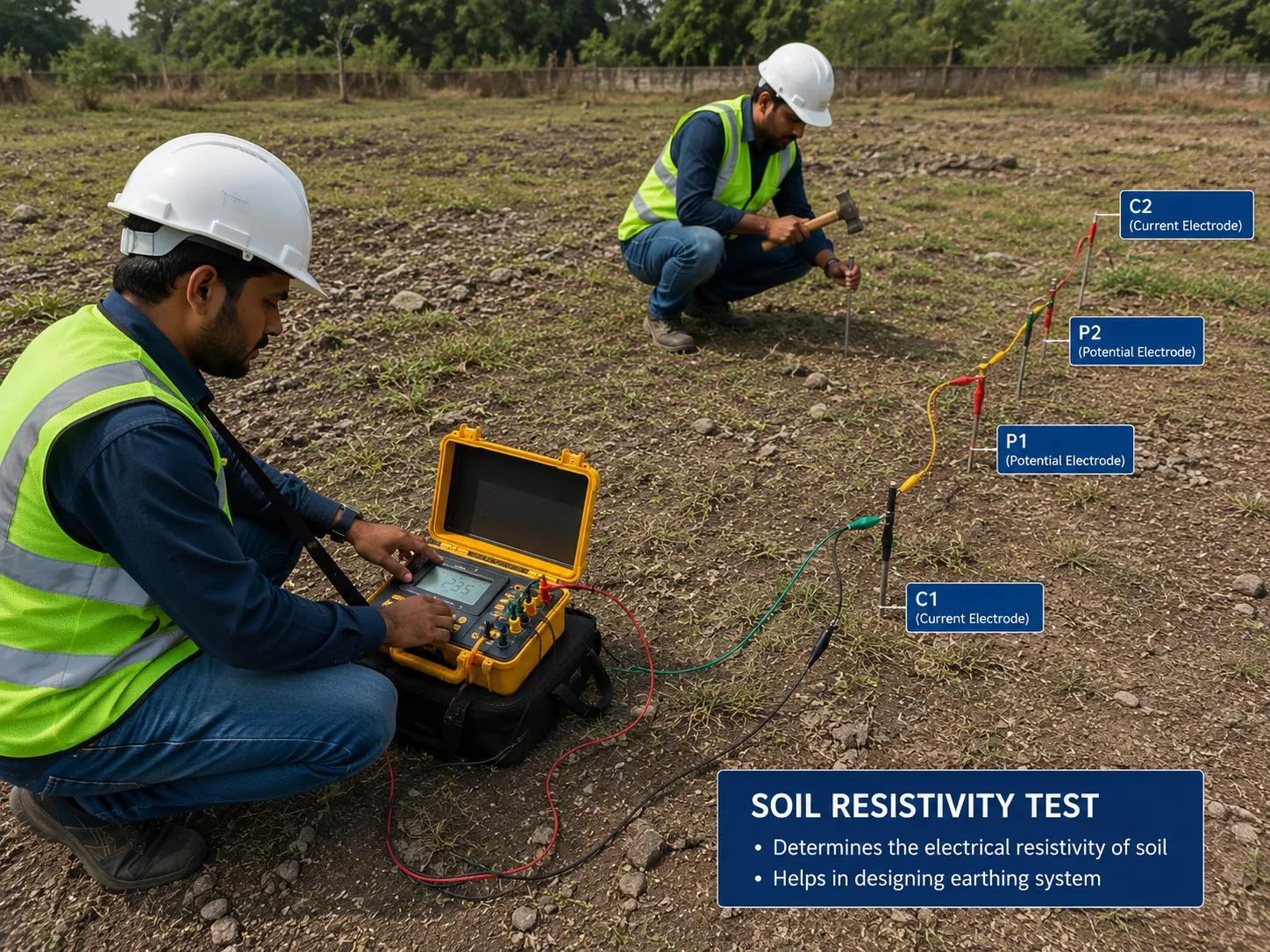
Soil Resistivity Test: Scientific Foundation for Safe Earthing Systems
Introduction
A soil resistivity test measures how strongly soil resists the flow of electrical current at a given site. This data forms the scientific basis for designing safe, effective earthing and grounding systems in industrial, commercial, and infrastructure projects.
For electrical contractors, solar developers, telecom companies, and industrial project teams, a soil resistivity test is essential before installing any earthing system. It ensures the grounding design matches actual soil conditions, preventing electrical faults and safety hazards.
Accurate soil resistivity testing improves earthing performance, reduces installation costs, and ensures compliance with electrical safety standards across power plants, substations, and manufacturing facilities in India.
What is a Soil Resistivity Test?
A soil resistivity test is a scientific measurement of the electrical resistance offered by soil at varying depths. Its core elements include:
1. Definition – a test that quantifies soil's resistance to electrical current flow
2. Purpose – to design earthing systems suited to actual ground conditions
3. Working principle – based on current injection and voltage measurement in soil
4. Importance – directly affects earthing resistance and electrical safety
5. Industry applications – used in substations, telecom towers, solar plants, and factories
This soil resistivity measurement is a mandatory step before earthing and grounding system design.
How is a Soil Resistivity Test Performed?
A professional soil resistivity test follows a structured field process:
1. Site inspection – assessing terrain, soil type, and project layout
2. Wenner Four Pin Method – the most widely used technique, involving four electrodes placed at equal intervals
3. Equipment used – resistivity meters and advanced soil testing equipment for precise readings
4. Data collection – recording resistance values at multiple depths and locations
5. Result interpretation – analyzing soil layers to determine resistivity variation
6. Report preparation – documenting findings for earthing design and approvals
This scientific electrical and geotechnical analysis ensures earthing systems are designed on accurate, site-specific data rather than assumptions.
Benefits and Applications of Soil Resistivity Test
A properly conducted soil resistivity test delivers clear engineering and safety benefits:
1. Accurate earthing design based on real soil resistance values
2. Improved electrical safety by reducing fault current risks
3. Lower installation costs through optimized grounding system design
4. Compliance with industry standards set by CEA and BIS
5. Critical for power plants, solar projects, telecom towers, and commercial and industrial facilities
These applications make soil resistivity testing a foundational step for any project involving electrical infrastructure.
Factors Affecting Soil Resistivity
Several natural and site conditions influence soil resistivity readings:
1. Soil moisture – wetter soil generally shows lower resistivity
2. Temperature – resistivity increases as soil temperature drops
3. Soil composition – clay, sand, and rock behave differently electrically
4. Salt content – higher salinity reduces resistivity
5. Seasonal variations – readings can shift between dry and monsoon seasons
6. Depth of measurement – resistivity often varies significantly with depth
7 round conditions – compaction and layering affect current flow
Understanding these factors helps engineers design earthing systems that remain effective across seasonal changes.
Why Choose Bhoojal Survey
Bhoojal Survey delivers precise, standards-compliant soil resistivity testing services:
1. Experienced geotechnical and electrical experts handling diverse project types
2. Advanced soil resistivity testing equipment for accurate, repeatable results
3. Accurate data analysis and reporting suited for design and regulatory approval
4. Pan-India testing services across industrial, telecom, and energy sectors
5. Customized engineering solutions based on site-specific soil behaviour
6. Fast project delivery without compromising testing accuracy
7. Strong support for infrastructure and industrial project requirements
Conclusion
A soil resistivity test is a critical first step in designing safe, effective earthing and grounding systems. Scientific soil resistivity measurement helps electrical contractors, industrial developers, and infrastructure teams reduce risks while meeting safety and regulatory standards.
Bhoojal Survey's experienced team delivers accurate, technology-driven soil resistivity testing services across India. Contact Bhoojal Survey today for a professional soil resistivity test consultation and build your earthing system on a foundation of scientific accuracy.
FAQs
1. What is a Soil Resistivity Test?
A soil resistivity test measures the electrical resistance of soil to determine how effectively it can support an earthing system.
2. Why is a Soil Resistivity Test important?
It ensures earthing systems are designed accurately, improving electrical safety and reducing the risk of equipment damage.
3. Which method is used for soil resistivity testing?
The Wenner Four Pin Method is the most widely used technique for measuring soil resistivity accurately.
4. How long does a Soil Resistivity Test take?
Most soil resistivity tests are completed within a day, depending on site size and the number of test points required.
5. Which industries require soil resistivity testing?
Power plants, substations, telecom towers, solar energy projects, and manufacturing facilities commonly require soil resistivity testing.