
Hydrological Survey
At Bhoojal Survey we conduct Hydrological Survey, Drainage Analysis and Flood Risk Assessment studies for industrial, infrastructure, airport, solar, mining, and commercial projects across India. Our team has worked on hydrology and flood modelling projects involving rainfall analysis, runoff estimation, watershed delineation, flood inundation studies, and drainage planning for various site conditions.
The hydrological study is carried out to understand rainfall runoff, natural drainage patterns, catchment characteristics, stormwater flow, and flood potential within the project area. These studies play an important role in site planning, drainage design, flood mitigation, and environmental assessment.
Our experience includes hydrology studies for solar plants, industrial developments, airport drainage systems, and flood modelling projects using topographical analysis, rainfall data interpretation, DEM assessment, watershed analysis, and hydrological modelling approaches.
Methodology of Hydrological Survey
1. Site Inspection & Field Assessment
2. Collection of Rainfall & Topographical Data
3. Catchment & Watershed Delineation
4. Drainage & Stream Network Analysis
5. Runoff & Stormwater Assessment
6. Flood Risk & Inundation Analysis
7. Hydrological Modelling & Report Preparation
1. Site Inspection & Field Assessment
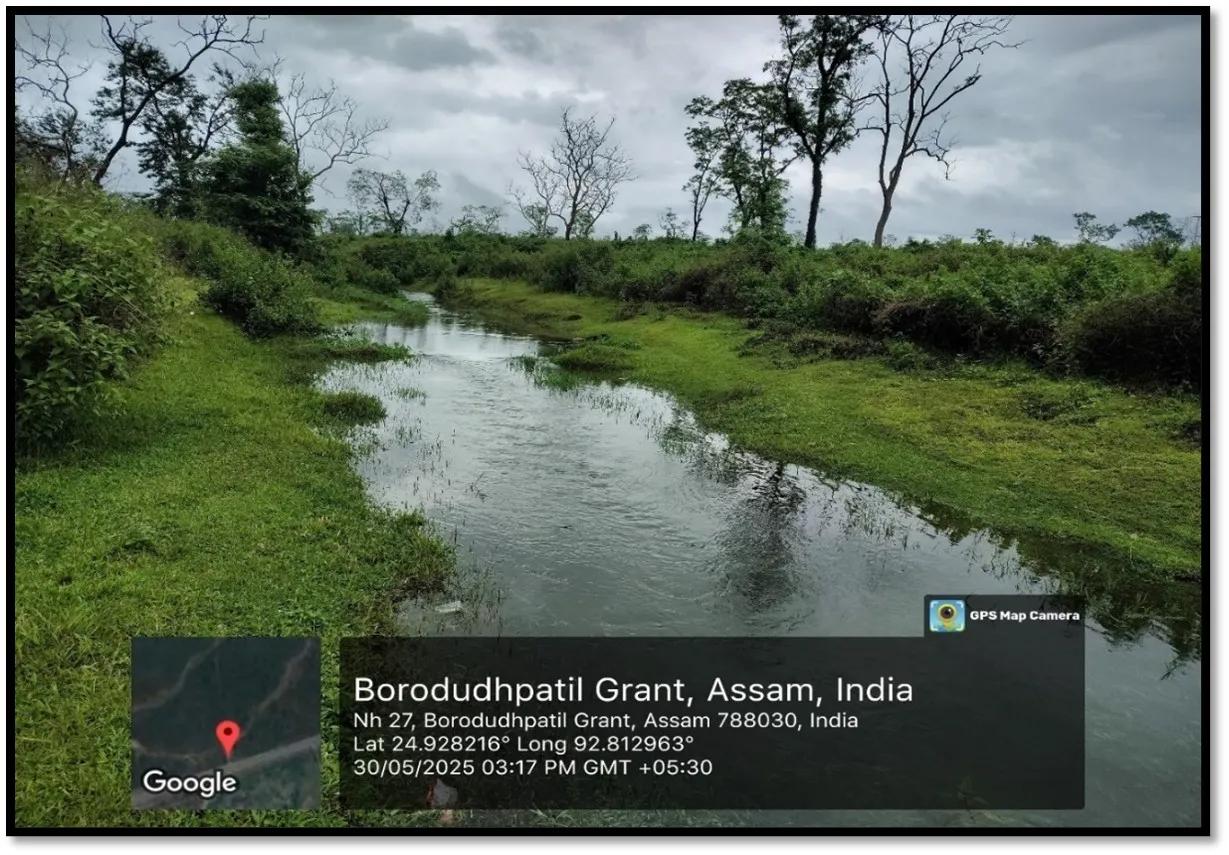
The hydrological survey begins with a detailed site inspection to understand the existing terrain conditions, natural drainage patterns, streams/nalas, low-lying areas, water accumulation zones, and surrounding catchment characteristics. Field observations are carried out to assess surface water movement, slope conditions, existing drainage paths, and flood-prone locations within and around the project site.
2. Collection of Rainfall & Topographical Data
Historical rainfall data is collected from IMD, local meteorological departments, and other reliable sources to understand rainfall patterns, runoff conditions, and flood potential of the project area. Rainfall analysis is carried out for different return periods as required for hydrological and flood risk studies.
Topographical and contour data of the site is analysed to study surface slope, drainage flow, low-lying areas, and natural water movement within the project area. This data plays an important role in catchment delineation, runoff estimation, drainage analysis, and hydrological modelling.
Historical rainfall data analysis carried out for hydrological and flood risk assessment studies.
3. Catchment & Watershed Delineation
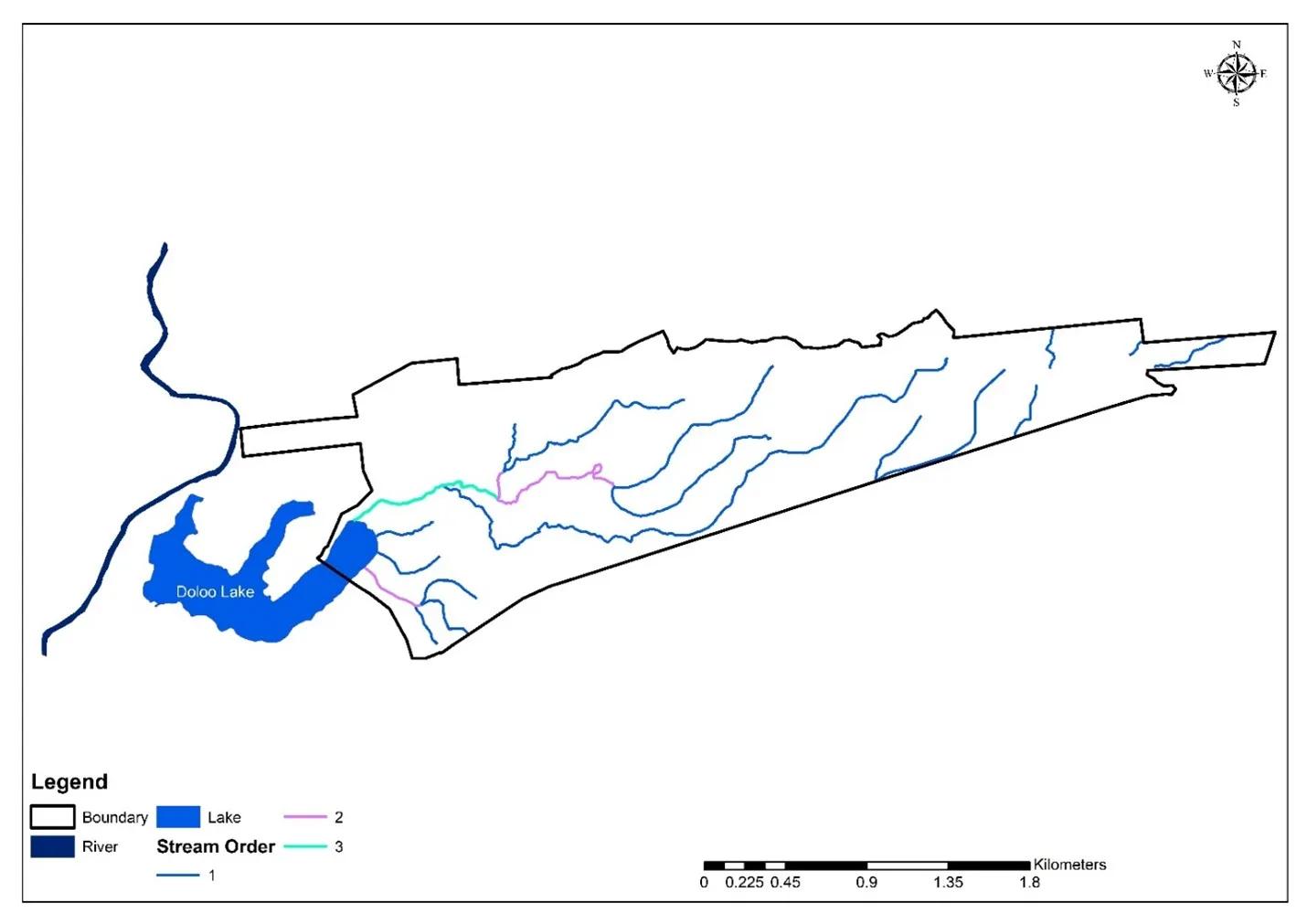
Catchment and watershed analysis is carried out to understand the movement of surface water within and around the project area. Using contour data, DEM analysis, satellite imagery, and terrain interpretation, drainage flow directions, stream networks, watershed boundaries, and contributing catchment areas are identified.
This assessment helps in understanding runoff generation, drainage behavior, external water inflow, and flood contribution from surrounding areas. Stream order mapping and watershed delineation also play an important role in drainage planning, flood risk assessment, and hydrological modelling studies.
4. Drainage & Runoff Analysis
Drainage and runoff analysis is carried out using topographical survey data, DEM analysis, catchment characteristics, and historical rainfall records collected for the project area. Surface slope, drainage flow direction, runoff accumulation zones, and discharge points are analysed to understand the drainage behavior of the site.
Historical rainfall data is analysed to prepare Intensity-Duration-Frequency (IDF) curves and estimate rainfall intensity for different return periods including 25-year, 50-year, and 100-year return period rainfall events. Catchment area, runoff coefficient, land use characteristics, slope conditions, and time of concentration are evaluated for hydrological assessment and runoff estimation.
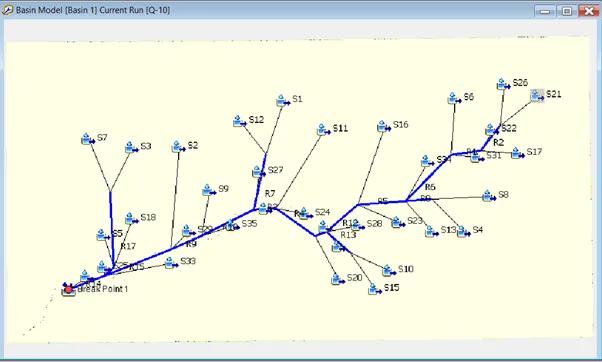
Hydrological modelling using HEC-HMS, HEC-RAS, MIKE FLOOD, TUFLOW, XP-STORM, and similar hydrological and hydraulic modelling software is carried out to estimate peak runoff, runoff hydrographs, flood discharge, and stormwater flow under extreme rainfall conditions. The analysis helps in flood risk assessment, drainage planning, flood mitigation studies, and identification of critical water accumulation zones within the project area.
5. Flood Risk & Inundation Analysis
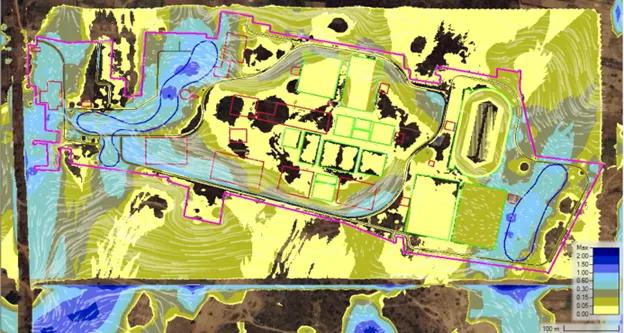
Flood risk and inundation analysis is carried out to assess the impact of extreme rainfall events, surface runoff, river/nala overflow, and external catchment contribution within the project area. The study helps in identifying flood-prone zones, water accumulation areas, flow paths, and critical low-lying regions susceptible to flooding during high-intensity rainfall conditions.
Hydraulic and hydrodynamic modelling using HEC-RAS, MIKE FLOOD, TUFLOW, XP-STORM, and similar flood modelling software is carried out for different return periods including 25-year, 50-year, and 100-year return period flood events. Flood inundation maps, flood depths, flow velocity, and water surface elevations are analysed to understand flood behavior within and around the project site.
The analysis also helps in identifying suitable drainage outfall locations, flood mitigation measures, and stormwater management requirements for safe project planning and infrastructure development.
6. Hydrological Study Deliverables
The final hydrological study report includes detailed assessment of rainfall runoff, drainage behavior, catchment characteristics, and flood risk within the project area. The report is prepared using field observations, topographical analysis, rainfall interpretation, and hydrological modelling outputs.
Typical deliverables include:
1. Catchment & watershed maps
2. Drainage network analysis
3. Rainfall analysis and IDF curves
4. Peak runoff estimation
5. Flood inundation maps
6. Water depth and flow direction analysis
7. Highest Flood Level (HFL) assessment
8. Stormwater drainage recommendations
9. Flood mitigation measures
10. Hydrology & flood risk assessment report
Difference Between Hydrological, Hydrogeological & Hydrographic Survey
Survey Type
Purpose
Main Focus Area
Hydrological Survey
Study of surface water movement and flood behavior
Rainfall runoff, drainage analysis, watershed study, flood risk assessment
Hydrogeological Survey
Investigation of groundwater conditions
Aquifer identification, groundwater potential, borewell siting, resistivity survey
Hydrographic Survey
Mapping and measurement of water bodies
River/lake/sea depth measurement, underwater terrain mapping, navigation studies
Hydrological surveys mainly deal with surface water flow, drainage behavior, rainfall runoff, and flood assessment within a catchment area. Hydrogeological surveys focus on groundwater occurrence and aquifer investigation for borewell and groundwater exploration studies. Hydrographic surveys are generally conducted in rivers, lakes, reservoirs, ports, and coastal regions for underwater mapping and navigation purposes.
Hydrology & Flood Risk Assessment Projects succesfully conducted by bhoojal survey
1. Hydrological Survey and Flood Risk Assessment for Solar Plant Site – Sangli, Maharashtra
2. Hydrological Study and Flood Modelling for Airport Project – Silchar, Assam
3. Post Development Hydraulic Analysis for Infrastructure Site – Bihar
4. Hydrological Survey and Flood Modelling for Road Project Low-Lying Areas – Gujarat
5. Peak Flood Risk Assessment for Agricultural Land Near River – Madhya Pradesh
6. Hydrological Survey and Drainage Recommendations for Industrial Project – Amravati, Maharashtra
7. Watershed Delineation and Runoff Analysis for Solar Power Project – Rajasthan
8. Flood Inundation Mapping and Stormwater Assessment for Industrial Development – Chhattisgarh
9. Drainage Analysis and Hydrological Modelling for Township Development Project – Uttar Pradesh
10. Catchment Area Analysis and Surface Water Assessment for Mining Project – Odisha
Software & Tools Used
Industry-standard hydrological, hydraulic, GIS, and terrain analysis software are used for hydrological modelling, runoff estimation, drainage analysis, and flood risk assessment.
1. HEC-HMS
2. HEC-RAS
3. MIKE FLOOD
4. TUFLOW
5. ArcGIS
6. QGIS
7. Global Mapper
8. AutoCAD Civil 3D
Applications of Hydrological Survey
Hydrological surveys and flood risk assessment studies are widely used for:
1. Solar Power Projects
2. Industrial & Manufacturing Projects
3. Roads & Highway Developments
4. Airport & Infrastructure Projects
5. Mining & Quarry Areas
6. Railway Projects
7. Residential & Township Developments
8. Stormwater Drainage Planning
9. Environmental & EIA Studies
10. Flood-Prone & Low-Lying Areas
11. River & Nala Flood Assessment
12. Site Development & Land Planning
Frequently Asked Questions (FAQs)
1. What is a Hydrological Survey?
A hydrological survey is the study of rainfall runoff, drainage systems, surface water flow, catchment characteristics, and flood potential within a project area.
2. Why is Hydrological Survey important?
Hydrological surveys help in understanding drainage behavior, flood risk, runoff generation, and stormwater movement for safe project planning and infrastructure development.
3. What is a 100-Year Return Period?
A 100-year return period rainfall event represents an extreme rainfall condition having a 1% probability of occurring in any given year and is commonly used for flood risk assessment and drainage design.
4. Which software is used for Hydrological & Flood Modelling?
Software such as HEC-HMS, HEC-RAS, MIKE FLOOD, TUFLOW, ArcGIS, and QGIS are commonly used for hydrological modelling, runoff estimation, and flood inundation analysis.
5. What is an IDF Curve?
An Intensity-Duration-Frequency (IDF) curve represents the relationship between rainfall intensity, rainfall duration, and return period, and is widely used for runoff estimation and drainage design.
6. What are the major deliverables of a Hydrological Study?
Typical deliverables include catchment maps, drainage analysis, rainfall analysis, IDF curves, runoff estimation, flood inundation maps, HFL assessment, and flood mitigation recommendations.
Why Choose Bhoojal Survey & Consultants
1. Experienced hydrology & flood modelling team
2. Industry-standard software and analysis
3. Site-specific drainage and runoff assessment
4. Hydrological studies for industrial & infrastructure projects
5. GIS, DEM, and watershed-based analysis
6. Detailed technical reporting and flood assessment
Our services include Hydrological Survey, Hydrological Study, Flood Modelling, Drainage Analysis, Watershed Delineation, Flood Inundation Mapping, and Surface Water Assessment for industrial and infrastructure projects.
Contact Bhoojal Survey & Consultants for Hydrological Survey, Flood Risk Assessment, Drainage Analysis, Watershed Delineation, and HEC-HMS / HEC-RAS based hydrological modelling services across India.
Hydrological Survey Services Across India
We provide hydrological survey, flood risk assessment, drainage analysis, watershed delineation, and hydrological modelling services for industrial, infrastructure, solar, mining, and environmental projects across India.
Our team has executed hydrology and flood assessment studies in multiple states including Madhya Pradesh, Maharashtra, Gujarat, Assam, Rajasthan, Bihar, Chhattisgarh, Odisha, Uttar Pradesh, and other regions across India.