
NOCAP CGWA in Madhya Pradesh - Complete Groundwater Permission Guide
If you're planning to set up an industry, commercial building, or any infrastructure project in Madhya Pradesh, you've probably heard about NOCAP CGWA. It's not as complicated as it sounds. Basically, if you want to use groundwater for your project, you need official permission from the Central Ground Water Authority. This permission comes through the NOCAP portal, and it's mandatory across all major cities in MP.
Madhya Pradesh is seeing rapid growth in cities like Indore, Bhopal, Jabalpur, and Gwalior. With this growth comes higher demand for water. That's why groundwater permission in Madhya Pradesh has become stricter. The government wants to make sure that water is used responsibly and doesn't run out in the coming years.
What is NOCAP CGWA?
NOCAP stands for No Objection Certificate Application Portal. It's an online platform managed by the Central Ground Water Authority (CGWA) under the Ministry of Jal Shakti. Through this portal, anyone who wants to extract groundwater for industrial, commercial, or infrastructure use must apply and get clearance.
The role of CGWA is simple: protect India's groundwater from over-extraction. They check your water requirement, location, and whether your project will harm the local water table. If everything looks good, they issue the NOC. Without it, you can't legally drill a borewell or use groundwater for your project.
The NOCAP portal makes the entire groundwater clearance process digital. You don't have to visit government offices multiple times. Just upload your documents, fill in the details, and track your application status online.
Why NOCAP CGWA is Required in MP Cities
Madhya Pradesh is not a water-rich state. Many districts are facing groundwater stress, especially in urban and industrial zones. Cities like Indore and Bhopal have grown so fast that the demand for water has doubled in the last decade.
That's where CGWA guidelines come in. They help control how much water industries and builders can extract. This prevents excessive depletion and keeps the water table stable for future use. It's not just about following the law—it's about long-term water security.
Also, many projects won't get environmental clearance or building permits unless they show CGWA NOC. So if you're serious about starting your project on time, getting groundwater extraction approval should be your first step.
Who Needs NOCAP CGWA in Madhya Pradesh?
Not everyone needs CGWA permission. It's mainly required for projects that use large amounts of groundwater. Here's a simple list:
- Industries and manufacturing units
- Commercial complexes and malls
- Real estate and housing projects
- Hotels and resorts
- Hospitals and educational institutions
- Infrastructure projects like highways and airports
- Anyone planning to extract more than a certain limit of groundwater daily
If your project falls under any of these categories, you'll need to register on the NOCAP portal and apply for clearance. It's a one-time process, but it requires proper documentation and a groundwater survey report.
NOCAP CGWA Requirement – City-Wise Overview
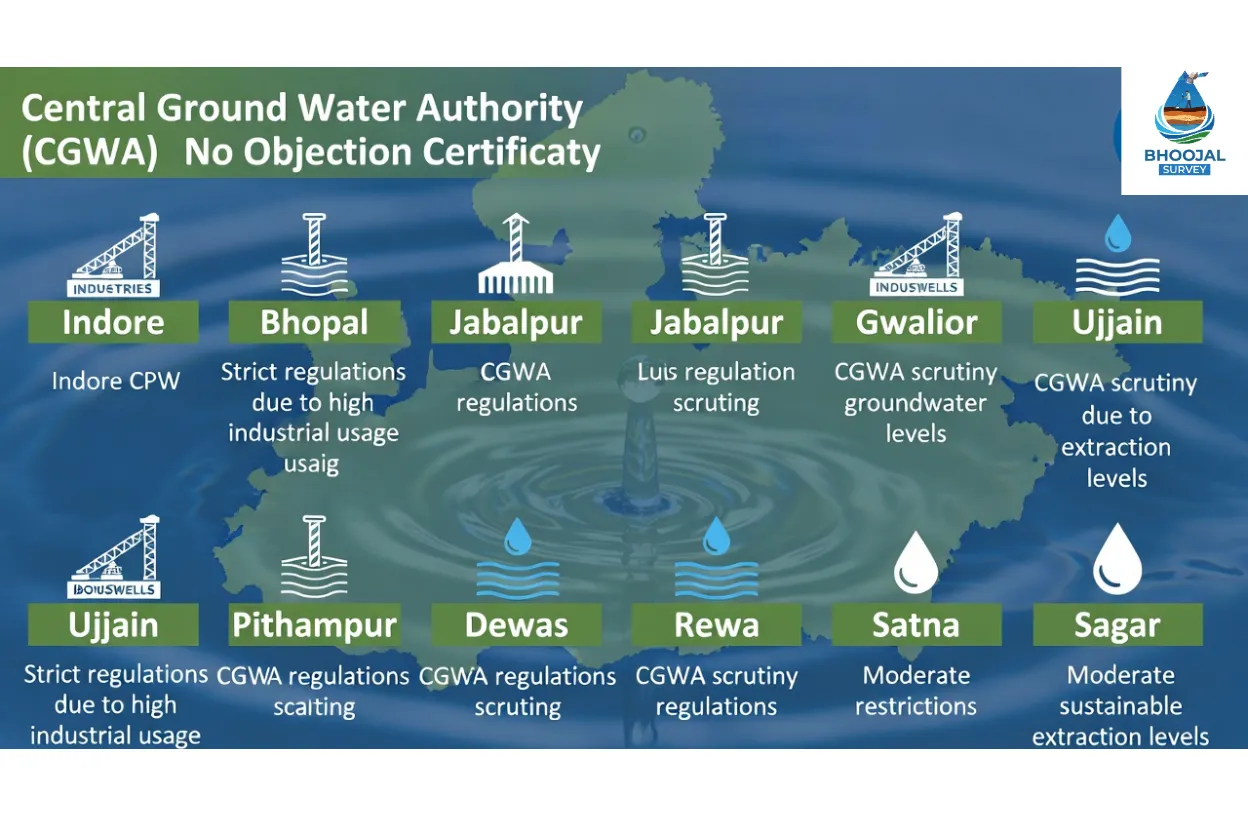
Different cities in Madhya Pradesh have different levels of groundwater availability. Some areas are in the safe zone, while others are over-exploited. That's why CGWA NOC requirements can vary slightly from city to city. Let's look at the major cities and what you need to know.
CGWA NOC in Indore
Indore is the commercial capital of Madhya Pradesh and one of the fastest-growing cities in India. Industrial groundwater use here is very high, which means CGWA scrutiny is strict. If you're setting up a factory, office building, or any large project in Indore, you'll definitely need clearance. For expert help, you can connect with a trusted CGWA NOC Consultant in Indore who understands local requirements and can guide you through the approval process smoothly.
CGWA NOC in Bhopal
Bhopal, being the state capital, has a mix of government offices, residential areas, and industries. Groundwater demand is increasing every year. Whether you're a builder or an industrialist, getting borewell permission is essential before starting any construction. Professional consultants can help you prepare the necessary reports and submit your application without delays. Learn more about CGWA NOC in Bhopal to ensure your project stays compliant.
CGWA NOC in Jabalpur
Jabalpur is an important city in central MP with growing industrial and commercial activity. The city has moderate groundwater availability, but certain zones are under stress. If you're planning a project here, make sure to check the local groundwater status and apply for clearance early. You can find detailed guidance on CGWA NOC in Jabalpur to understand area-specific requirements.
CGWA NOC in Gwalior
Gwalior is known for its historical importance, but it's also becoming a hub for small and medium industries. Water demand is rising, and so is the need for proper water compliance for projects. CGWA has become more active in monitoring groundwater use in this region. For smooth approvals, check out the complete process for CGWA NOC in Gwalior.
CGWA NOC in Ujjain
Ujjain is a religious and cultural center, but it also has a growing commercial sector. Many new hotels, hospitals, and residential projects are coming up. All of them need groundwater clearance if they plan to use borewells. The approval process is straightforward if you have the right documents. Visit CGWA NOC in Ujjain for city-specific information.
CGWA NOC in Pithampur
Pithampur is one of the largest industrial areas in Madhya Pradesh. Almost every industry here needs CGWA permission because of high water usage. The authorities are very particular about hydrogeological reports and water consumption details. If you're setting up a unit in Pithampur, don't skip this step. Get professional help through CGWA NOC in Pithampur services.
CGWA NOC in Dewas
Dewas is another emerging industrial town near Indore. With several manufacturing units and commercial establishments coming up, the demand for groundwater is increasing. CGWA NOC is mandatory for any project extracting groundwater beyond a certain limit. Make sure to consult local experts who understand the groundwater table and can prepare accurate survey reports for your application.
CGWA NOC in Rewa
Rewa is developing rapidly, especially in the renewable energy sector. Solar plants, industries, and infrastructure projects are all coming up. If your project involves groundwater extraction, you'll need CGWA clearance. The process is similar to other cities, but local hydrogeological conditions may vary. Always get a proper groundwater survey done before applying.
CGWA NOC in Satna
Satna is known for its cement industry and limestone reserves. Many industries here rely on groundwater for operations. CGWA has strict monitoring in this region to prevent over-extraction. If you're planning to set up a plant or any large project in Satna, applying for CGWA NOC should be part of your initial planning stage.
CGWA NOC in Sagar
Sagar is an educational and administrative hub with steady growth in residential and commercial sectors. Groundwater use is moderate, but CGWA still requires clearance for projects above a certain threshold. Whether it's a college campus, hospital, or housing society, getting the NOC ensures your project runs without legal issues later on.
How to Apply for NOCAP CGWA in MP
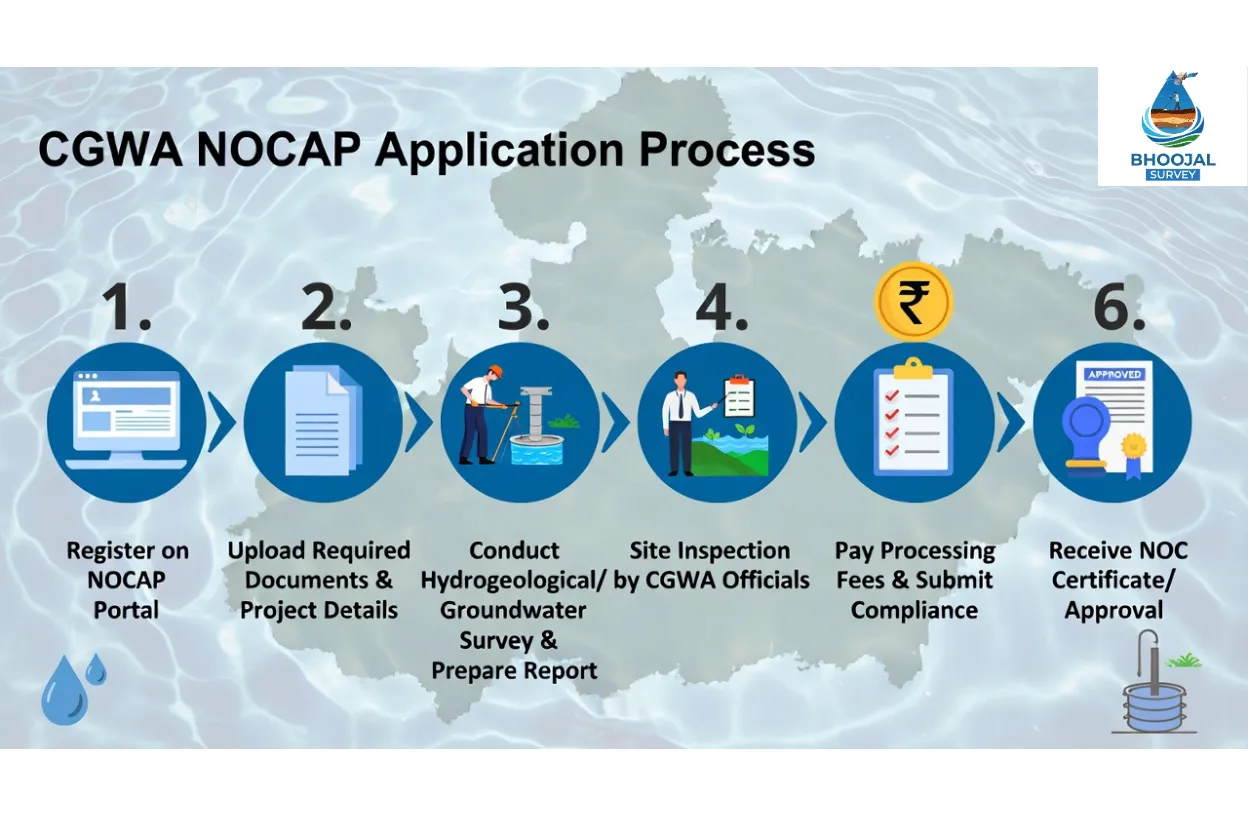
Applying for NOCAP CGWA is not difficult if you follow the steps properly. Here's how it works:
Step 1: Registration
Visit the official NOCAP portal and create an account. You'll need basic details like your name, mobile number, email, and project information.
Step 2: Fill the Application
Once registered, log in and fill out the application form. Mention your water requirement, location, type of project, and other relevant details.
Step 3: Upload Documents
You'll need to upload scanned copies of land documents, hydrogeological reports, site maps, and water usage estimates. Make sure all files are clear and properly labeled.
Step 4: Submit and Track
After submission, you'll get an application number. Use it to track your status online. CGWA may ask for additional information or clarifications during the review process.
Step 5: Approval
If everything is in order, CGWA will issue the NOC. You can download it from the portal and use it for your project approvals.
Documents Required for NOCAP CGWA
Getting your documents ready is half the battle. Here's what you'll typically need:
- Land ownership proof (sale deed, lease agreement, etc.)
- Site location map with coordinates
- Detailed water requirement estimate
- Hydrogeological report prepared by a licensed consultant
- Project details (type, size, expected water consumption)
- Copy of environmental clearance (if applicable)
- Any other documents specified by CGWA for your project type
It's a good idea to hire a professional consultant who specializes in CGWA NOC applications. They know exactly what CGWA expects and can save you from unnecessary rejections or delays.
Conclusion
Getting NOCAP CGWA approval is not just a legal formality—it's a step towards responsible water use. Every city in Madhya Pradesh, from Indore to Sagar, has its own groundwater challenges. By following the proper process and getting city-specific clearance, you're contributing to long-term water sustainability.
Whether you're an industrialist, builder, or project developer, make sure you understand the groundwater clearance process and apply early. Don't wait until the last moment. CGWA NOC can take time, especially if your documents are incomplete or your water requirement is high.
If you need help with the application, groundwater survey, or any technical report, connect with experienced consultants who know the system inside out. They'll make sure your project gets the green light without unnecessary stress.
Frequently Asked Questions
What is NOCAP CGWA and why is it needed?
NOCAP CGWA is an online portal managed by the Central Ground Water Authority for obtaining No Objection Certificates for groundwater extraction. It is mandatory for industries, commercial projects, and infrastructure developments in Madhya Pradesh to ensure sustainable groundwater management and prevent over-exploitation.
How long does it take to get CGWA NOC approval in MP?
The approval timeline for CGWA NOC in Madhya Pradesh typically ranges from 60 to 90 days after complete application submission. The duration depends on document completeness, site inspection requirements, and the complexity of your groundwater extraction proposal.
Which cities in MP require CGWA NOC?
All major cities and industrial areas in Madhya Pradesh require CGWA NOC including Indore, Bhopal, Jabalpur, Gwalior, Ujjain, Pithampur, Dewas, Rewa, Satna, and Sagar. Any project extracting groundwater beyond prescribed limits must obtain clearance regardless of location.
Can I apply for CGWA NOC without a consultant?
Yes, you can apply directly through the NOCAP portal. However, hiring an experienced consultant is recommended as they understand local geological conditions, prepare accurate hydrogeological reports, and ensure your application meets all technical requirements, significantly improving approval chances and reducing delays.