
Introduction
In the world of fluid measurement, digital flow meters and piezometers play crucial roles. A digital flow meter measures the flow rate of liquids or gases, while a piezometer measures the pressure or depth of fluids, typically in groundwater. Understanding how these devices work, their types, and applications can provide valuable insights for various industries.
What is a Digital Flow Meter?
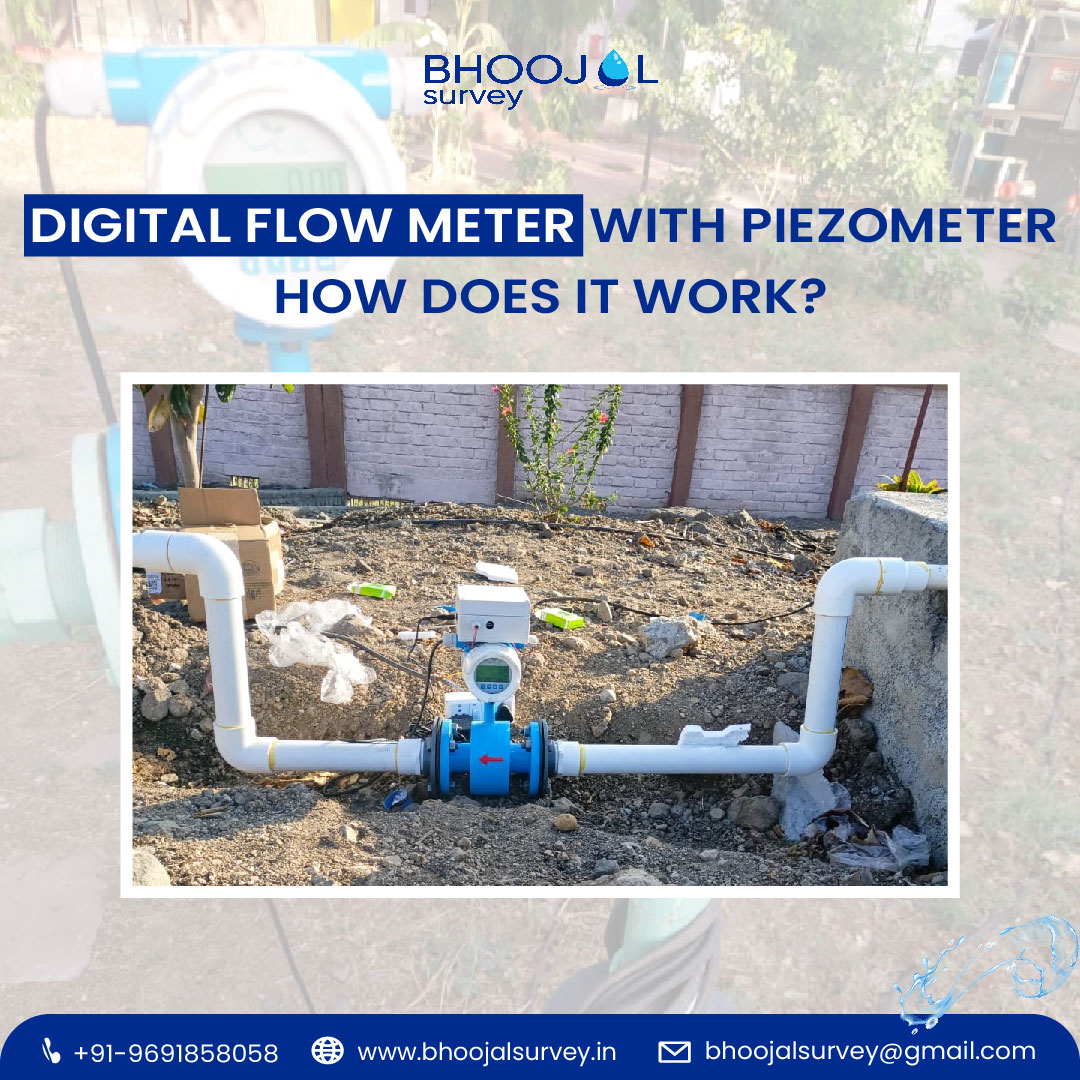
A digital flow meter is an electronic device that measures the rate of flow of liquids or gases in a pipe. It provides accurate and real-time data, which is crucial for monitoring and controlling flow rates in various applications. The key components of a digital flow meter include sensors, transmitters, and display units that work together to convert flow data into a readable format.
How Does a Digital Flow Meter Work?
Digital flow meters operate based on different principles depending on their type. Here are a few common types:
- 1. Electromagnetic Flow Meters:These use Faraday's law of electromagnetic induction to measure flow. When a conductive fluid flows through a magnetic field, it generates a voltage proportional to the flow velocity.
- 2. Ultrasonic Flow Meters: These use sound waves to determine the flow rate. By measuring the time difference between ultrasonic pulses sent upstream and downstream, the flow velocity can be calculated.
- 3. Turbine Flow Meters: These measure flow based on the rotational speed of a turbine placed in the flow path. The rotational speed is directly proportional to the flow rate.
- 4. Thermal Flow Meters: These measure flow by detecting changes in temperature. As fluid flows over a heated sensor, the rate of cooling is used to determine the flow rate.
Advantages of Digital Flow Meters
Digital flow meters offer several advantages, including:
1. Accuracy: High precision in measuring flow rates.
2. Ease of Use: Simple installation and operation.
3. Data Logging: Capability to record and store data for analysis.
Applications of Digital Flow Meters
Digital flow meters are used in a variety of fields:
1. Industrial Applications: Monitoring and controlling processes in manufacturing plants.
2. Environmental Monitoring: Tracking water and air quality.
3. Water Management: Managing water supply and distribution systems.
Accurate flow meters are crucial in a wide range of industries and applications for several reasons.
1. Operational Efficiency: Accurate flow measurement ensures that processes run smoothly and efficiently. In industries like oil and gas, pharmaceuticals, and water treatment, precise flow measurement is essential for maintaining optimal operation conditions and ensuring product quality.
2. Cost Management: Proper flow measurement can help in cost management by preventing wastage of materials. Inaccurate flow data can lead to overuse or underuse of resources, impacting the bottom line.
3. Regulatory Compliance: Many industries are subject to strict regulations regarding the use of natural resources and the discharge of waste products. Accurate flow meters ensure that companies meet these regulatory requirements, avoiding fines and legal issues.
4. Safety: In industries dealing with hazardous materials, precise flow measurement is critical to ensuring safe operations. Incorrect measurements can lead to dangerous situations, including leaks or overpressure conditions.
5. Environmental Protection: Accurate flow meters help in monitoring and controlling the use of water and other natural resources, contributing to environmental sustainability. They help in detecting leaks early, reducing the risk of contamination and waste.
How to Choose the Best Flow Meter
Choosing the best flow meter involves considering several key factors to ensure it meets the specific needs of your application:
1. Type of Fluid: The nature of the fluid being measured—whether it's a gas, liquid, or slurry—affects the type of flow meter required. Consider the fluid's viscosity, density, and chemical properties.
2. Flow Range: Determine the flow rate range you need to measure. Ensure the flow meter you choose can handle the minimum and maximum flow rates in your system.
3. Accuracy Requirements: Different applications require different levels of accuracy. Choose a flow meter that meets the precision requirements of your process.
4. Installation Environment: Consider the physical conditions where the flow meter will be installed, such as temperature, pressure, and potential exposure to corrosive substances. The installation environment can influence the durability and performance of the flow meter.
5. Maintenance and Calibration: Look for flow meters that are easy to maintain and calibrate. Regular maintenance and calibration are essential for ensuring long-term accuracy and reliability.
6. Cost: While it’s important to consider the initial purchase price, also consider the total cost of ownership, including installation, maintenance, and potential downtime costs.
7. Technology: There are various flow meter technologies available, such as differential pressure, positive displacement, electromagnetic, ultrasonic, and turbine. Each has its advantages and limitations, so choose the one that best fits your application needs.
Water Flow Meter Types
There are several types of water flow meters, each suited for different applications and accuracy requirements:
1. Mechanical Flow Meters: These meters, such as positive displacement and turbine meters, measure flow through the movement of mechanical parts. They are reliable and straightforward but may wear out over time.
i. Positive Displacement Meters: Measure flow by capturing a set volume of water and counting the number of times this volume is filled. They are highly accurate for measuring low flow rates.
ii. Turbine Meters: Use a rotor that spins as water flows through. The speed of rotation is proportional to the flow rate. These are suitable for high flow rates and clean water applications.
2. Electromagnetic Flow Meters: Use the principle of electromagnetic induction to measure flow. They are highly accurate and suitable for dirty or corrosive fluids, as there are no moving parts that come into contact with the fluid.
3. Ultrasonic Flow Meters: Measure flow by sending ultrasonic signals through the water and measuring the time it takes for the signals to travel. They are non-intrusive and can measure flow from outside the pipe, making them ideal for applications where the pipe cannot be cut.
4. Vortex Flow Meters: Measure the vortices (swirls) created by a bluff body placed in the flow path. The frequency of these vortices is proportional to the flow rate. They are robust and suitable for a wide range of applications, including steam, gas, and water flow measurement.
5. Coriolis Flow Meters: Measure mass flow rather than volume flow. They are highly accurate and suitable for various fluids, including water, and are often used in applications requiring precise flow measurement.
What is a Piezometer in Groundwater?
A piezometer is a device used to measure the pressure or depth of groundwater. It provides vital information about the groundwater level, which is essential for water resource management, geotechnical engineering, and environmental studies.
Piezometer Working
Piezometers work by measuring the pressure exerted by the water in the ground. This pressure is converted into an equivalent water level, giving a direct measure of groundwater depth. The principle is simple: the higher the water level in the ground, the greater the pressure.
Types of Piezometers
There are several types of piezometers, each with specific applications:
1. Standpipe Piezometers: Simple and cost-effective, used for basic groundwater level measurements.
2. Vibrating Wire Piezometers: Offer high accuracy and are commonly used in geotechnical applications.
3. Pneumatic Piezometers: Utilise air pressure to measure water levels, suitable for remote locations.
4. Optical Piezometers: Use fibre optics for highly sensitive measurements, ideal for precise applications.
Applications of Piezometers
Piezometers are crucial in various fields:
1. Groundwater Monitoring: Tracking changes in groundwater levels over time.
2. Geotechnical Engineering: Assessing soil and rock stability.
3. Environmental Studies: Evaluating the impact of human activities on groundwater resources.
Piezometer Price
The cost of piezometers varies based on type, accuracy, and application. Basic models can be affordable, while advanced versions with high precision and durability come at a higher price.
Integrating Digital Flow Meter with Piezometer
Combining digital flow meters with piezometers offers enhanced monitoring capabilities. This integration allows for comprehensive data collection on both flow rates and groundwater levels, providing a holistic view of water resources.
Mandatory Compliance for Digital Flow Meter with Piezometer
Using these devices often requires adherence to regulatory standards. Compliance with certifications ensures that the equipment meets industry standards for accuracy and reliability.
Guidelines for Installation of Piezometers and their Monitoring Piezometer is a bore well/ tube well used only for measuring the water level by lowering the tape/sounder or automatic water level measuring equipment. It is also used to take water sample for water quality testing whenever needed. General guidelines for installation of piezometers are as follows for compliance of NOC:
1. The piezometer is to be installed/constructed at the minimum of 50 m distance from the pumping well through which groundwater is being withdrawn. The diameter of the piezometer should be about 4” to 6”.
2. The depth of the piezometer should be same as in case of the pumping well from which groundwater is being abstracted. If, more than one piezometers are installed the second piezometer should monitor the shallow groundwater regime. It will facilitate shallow as well as deeper groundwater aquifer monitoring.
3. The measuring frequency should be monthly and accuracy of measurement should be up to cm. The reported measurement should be given in meter up to two decimal.
4. For measurement of water level sounder or Automatic Water Level Recorder (AWLR) with telemetry system should be used for accuracy.
5. The measurement of water level in piezometer should be taken, only after the pumping from the surrounding tube wells has been stopped for about four to six hours.
6. All the details regarding coordinates, reduced level (with respect to mean level), depth, zone tapped and assembly lowered should be provided for bringing the piezometer into the National Hydrograph Monitoring System of Central Ground Water Board, and State Groundwater Monitoring System of State Groundwater Department for its validation.
7. The groundwater quality has to be monitored twice in a year during pre-monsoon (May/June) and post-monsoon (October/November) periods. Quality may be got analyzed from NABL approved lab or GWD Analytical Labs. Besides, one sample (1 lt capacity bottle) of ground water collected during pre-monsoon after proper packing may be sent to the concerned Regional Labs for chemical analysis.
8. A permanent display board should be installed at Piezometer/ Tube well site for providing the location, piezometer/ tube well number, depth and zone tapped of piezometer/tube well for standard referencing and identification.
9. Any other site specific requirement regarding safety and access for measurement may be taken care off.
How Bhoojal Survey Can Help You with Digital Flow Meter with Piezometer
Bhoojal Survey specialises in providing advanced solutions for groundwater monitoring. With expertise in digital flow meters and piezometers, they offer tailored services to meet your specific needs, ensuring accurate data collection and compliance with regulations.
Conclusion
Digital flow meters and piezometers are essential tools for fluid measurement and groundwater monitoring. Understanding their workings, types, and applications can greatly enhance their utility in various fields. By integrating these devices, users can achieve more comprehensive monitoring and data collection, ultimately leading to better management of water resources.
FAQs:Digital Flow Meter with Piezometer
1. What is the main advantage of using a digital flow meter?
The main advantage is its high accuracy and the ability to provide real-time data, which is crucial for monitoring and controlling fluid flow.
2. How does a piezometer measure groundwater levels?
A piezometer measures groundwater levels by detecting the pressure exerted by the water in the ground and converting it into an equivalent water level.
3. Can digital flow meters be used for both liquids and gases?
Yes, digital flow meters can measure the flow rates of both liquids and gases, depending on the type of meter used.
4. What are the common types of piezometers used in geotechnical engineering?
The common types are standpipe piezometers, vibrating wire piezometers, pneumatic piezometers, and optical piezometers.
5. Why is regulatory compliance important for digital flow meters and piezometers?
Regulatory compliance ensures that these devices meet industry standards for accuracy and reliability, which is essential for providing trustworthy data.